

Why Real-Time Suitless Motion Capture Belongs in Every Creative Class
Motion capture used to feel out of reach for most independent artists. The usual image was a performer in a sensor-covered suit, a dedicated studio, a specialist team, and software costs that made experimentation hard.
That picture has changed. Camera-based body tracking now lets artists capture movement in real time without a wearable suit. At Batship Studio, that shift matters enough that we teach an intro to real-time, suitless motion capture across our certification programs.
Students keep asking for it because it sits at the center of many creative paths at once: game animation, digital fashion, virtual production, cinematic storytelling, world building, and interactive experiences. The tool may be technical, but the creative value is simple. It helps artists move from static work to living, responsive digital performance.

What suitless motion capture means
Suitless motion capture uses cameras to read full-body movement and translate that motion onto a digital character. Instead of attaching sensors to the body, the system tracks the performer visually.
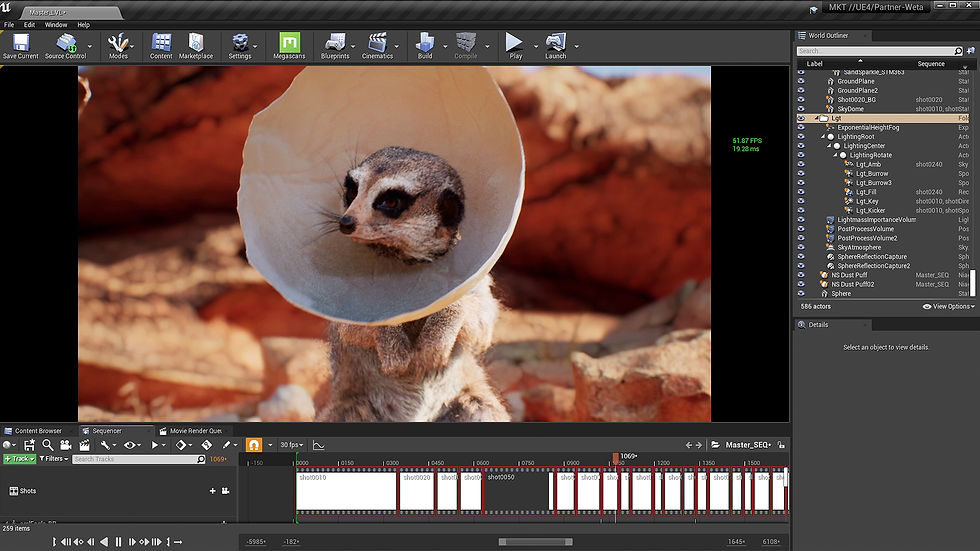
In a real-time setup, that performance appears live inside a tool like Unreal Engine. The artist can move, review the result, adjust the character, and try again without waiting for a long export and cleanup process.
That changes the feeling of animation work. It becomes more like rehearsal.
A student can test whether a walk has the right weight. A fashion designer can see how a digital garment reads as a model turns. A game developer can block out an enemy movement or player interaction. A world builder can test how a character feels inside a space, not just how the space looks from a still camera.
Traditional motion capture still has a place. High-end productions may need dedicated stages, specialized suits, marker systems, and long cleanup pipelines. Suitless systems do not replace every professional capture method. They do something different: they make motion capture easier to learn, test, and use in small creative workflows.
For education, that access is the point.
Students do not need to wait until they work at a large studio to understand performance capture. They can begin learning the language of motion early:
How body weight shifts during movement
How timing changes emotion
How camera tracking reads a pose
How captured motion maps onto a rig
How a live character behaves inside a real-time scene
That foundation helps even when a student later works with more complex systems.
Why accessibility changes the way artists learn
The old version of motion capture created a gap between theory and practice. Students could study examples, watch production breakdowns, and learn animation principles, but many could not touch the full process themselves.
Suitless capture closes that gap.
When the setup is lighter, students can experiment more often. More repetition leads to better instincts. Instead of treating motion capture as a rare production event, they can treat it as a normal creative tool.
That matters because motion capture is not just a button that makes animation happen. Good capture still needs judgment.
A clean result depends on the performer, the camera view, the rig, the scene scale, and the artist’s ability to spot what feels wrong. A movement may be technically captured but still lack intention. A character may follow the performer but feel too floaty, too stiff, or out of proportion.
The only way to build that eye is to work with motion often.
Accessible tools do not remove craft. They let more people practice the craft.
This is why we teach real-time suitless motion capture as a core literacy, not as a novelty. The goal is not to make every student a motion capture technician. The goal is to help creative students understand a production method that now touches many parts of digital art.
Where motion capture fits inside Batship Studio programs
At Batship Studio, we have built an introduction to real-time, suitless motion capture into our certification cohorts because the skill connects across disciplines.
It is not locked inside one animation class. It appears where students can use it in context.
Game Development students learn motion as gameplay language
For game developers, character movement is part of design. A jump, turn, idle animation, attack, dodge, or stumble tells the player how a character feels and how a system responds.
Suitless capture gives students a fast way to prototype those ideas.
A student can act out a movement, send it to a character, and see whether it fits the game’s tone. The first pass may not be final animation, and that is fine. It gives the team something alive to test against timing, camera angle, and player input.
That kind of early testing helps students understand the relationship between animation and interaction. A movement that looks good in isolation may feel slow in a playable scene. A pose that reads well from one camera may fail from another. Real-time capture makes those lessons visible.
Digital Fashion for Games students learn movement as design feedback
Digital fashion does not stop at a still render. Clothing has to move.
For students building garments for games, avatars, or virtual shows, motion capture helps answer practical questions:
Does the silhouette hold up while walking?
Does the outfit communicate the right attitude?
How does the garment read during a turn?
Does the movement support the character or fight against it?
A runway walk, a casual idle shift, or a dramatic pose can reveal design issues that a still image hides. When students capture motion and view it on a digital character, the garment becomes part of a performance.
That matters for digital fashion because style often lives in movement. A jacket can look sharp in a neutral pose but lose its feel when the body moves. A dress can have a strong shape but need a different walk cycle to sell the character. Motion capture gives students a way to test those choices earlier.
World Building students learn how people move through space
World building is no longer only about making beautiful environments. Built worlds now need to feel present, reactive, and usable.
That is why Batship Studio’s World Building certification has expanded to include interactive environments. Students still learn how to design spaces with mood, scale, depth, and visual logic. Now they also learn how those spaces respond to movement, input, and presence.
This pairs naturally with motion capture.
A world can look finished in a still image, but the real test begins when a body enters it. Can a character move through the doorway? Does the scale feel believable? Does the space support the kind of performance the scene needs? Do interactive elements respond in a way that feels clear?
Motion capture gives world builders a human reference point. Interactive design gives that motion somewhere meaningful to go.

Why real-time feedback teaches faster
One of the strongest parts of real-time capture is the feedback loop.
In a slower workflow, students may record movement, process files, import animation, apply it to a character, then discover that something was wrong from the start. Maybe the performance was too small. Maybe the framing missed a hand gesture. Maybe the character scale made the motion feel strange.
Real-time feedback shortens that loop.
Students can see the issue while they are still in the room, still thinking about the performance, and still able to try again. That saves time, but it also improves learning. The connection between choice and result stays fresh.
A student might notice that raising the shoulders makes a character look tense. Another might learn that a slow turn feels elegant on a fashion avatar but too sluggish in a game scene. A world building student might realize that a staircase looks great but feels awkward once a body moves through it.
These are hard lessons to learn from theory alone.
Real-time tools also help students become better collaborators. Motion capture sits between art, technology, and performance. It requires clear communication. The person performing needs direction. The person watching the character needs to give useful notes. The person setting up the scene needs to understand what the capture is supposed to prove.
Those habits translate directly to creative production.
Why this skill matters beyond one tool
Teaching suitless motion capture is not about chasing a single piece of software or one workflow. Tools will change. Tracking will improve. Engines will update. New devices will appear.
The lasting skill is understanding how human movement becomes digital performance.
That includes knowing what to look for when something feels wrong. It includes understanding how rigs receive motion, how real-time scenes handle animation, and how performance choices affect the final result. It includes learning when capture is useful and when hand animation, key poses, or procedural systems may be a better fit.
A strong creative artist does not need to use one method for everything. They need to know which method serves the work.
Suitless capture is especially useful because it lowers the cost of asking creative questions:
What if the character limps?
What if the model walks with more confidence?
What if this creature has a heavier body?
What if the player sees this action from below?
What if the room responds when someone steps inside?
Those questions lead to better scenes, stronger prototypes, and more thoughtful creative decisions.
The old barriers are no longer good enough
For a long time, motion capture belonged mostly to productions with money, space, and technical staff. That shaped who got to learn it.
Now the barrier is lower. That does not mean every setup is perfect or every result is production-ready. It means students can begin.
They can learn the vocabulary. They can make mistakes early. They can understand what performance capture offers before they are expected to use it under pressure. They can decide whether it belongs in their own practice.
This matters for independent artists and small studios too. A small team may not have access to a large capture stage, but they may still need animated characters, pitch materials, previsualization, virtual show tests, or interactive prototypes. Suitless capture gives them another practical path.
It also helps students build portfolios that show more than polished stills. A moving character, a responsive world, or a digital garment in motion tells a different story about skill. It shows that the artist understands time, body language, and interaction.
What students should take from the first module
An intro module should not overwhelm students with every technical detail. The first goal is confidence.
By the end of a strong introduction, students should understand the basic pipeline:
Set up a camera-based capture space.
Track a body in real time.
Apply the motion to a digital character.
View the result inside Unreal Engine.
Judge what works and what needs cleanup.
Connect the captured motion to a creative goal.
That last part is the most important.
Motion capture is not valuable because a body moved in front of a camera. It is valuable when the captured movement helps a character, garment, scene, or interactive space communicate more clearly.
A game student may use it to test a combat stance. A fashion student may use it to study how an outfit reads during a walk. A world building student may use it to check whether a space feels human in scale. Each use is different, but the core learning is shared.

Creative classes need tools that match real production
Creative education should prepare artists for the way digital work is actually made now. Characters move in real time. Worlds respond to input. Fashion exists on avatars and in engines. Cinematics may be blocked, tested, and revised live.
That is why real-time, suitless motion capture belongs in every creative class that touches digital characters, performance, or interactive space.
It gives students access to a skill that used to sit behind expensive equipment. It connects disciplines that too often get taught apart. It helps artists think with movement, not only with images. Most of all, it turns performance into something students can test, study, and shape.
At Batship Studio, we teach it across our certification programs because motion is now part of the creative foundation. A still image can show what a world looks like. Real-time movement shows how it feels to enter it. Our next certification cohorts Game Development (Arcade), Digital Fashion for Games, and World Building start September 21, 2026. Each program is 4 weeks, includes live instruction plus recorded content, and comes with official Epic Games certification on completion.
https://www.batshipstudio.com/certification-courses Batship Studio is Miami's only Epic Games Unreal Authorized Training Center, led by an Epic Games Authorized Instructor with production experience working on Star Trek, Fortnite, Barbie, and Sonic.

Comments